A failing turbo oil pipe rarely announces itself with one dramatic event. More often, it leaves small clues around the engine bay, the exhaust, and the oil system. So, what are the signs of a failing turbo oil pipe? Look for oil stains near the turbocharger, blue exhaust smoke, rising oil consumption, reduced boost, unusual whining, burnt-oil smells, or oil dripping onto hot components.
Corky Bell, author of Maximum Boost, described turbocharger oil as “the turbocharger’s lifeblood.” That principle remains important. A restricted, cracked, or leaking oil pipe can starve the turbo bearings within minutes. It can also allow oil to reach the compressor or turbine housing. The result may appear as smoke, sluggish acceleration, or a loud siren-like noise.
The diagnosis is not always clean. A blue puff does not automatically prove the oil pipe has failed. Worn seals, blocked breathers, poor drainage, and damaged bearings can create similar symptoms. Still, the pattern matters. Fresh oil around a pipe joint, a ticking or hissing sound, and low boost deserve immediate inspection. Small details often tell the real story.
This guide examines seven practical warning signs of a failing turbo oil pipe. It focuses on visible evidence, operating symptoms, and sensible inspection steps. Check the oil level first. Then inspect the pipe, fittings, seals, and surrounding heat shields. Do not ignore a minor leak. Turbocharger problems can become expensive quickly, and early diagnosis is often less dramatic than the repair.
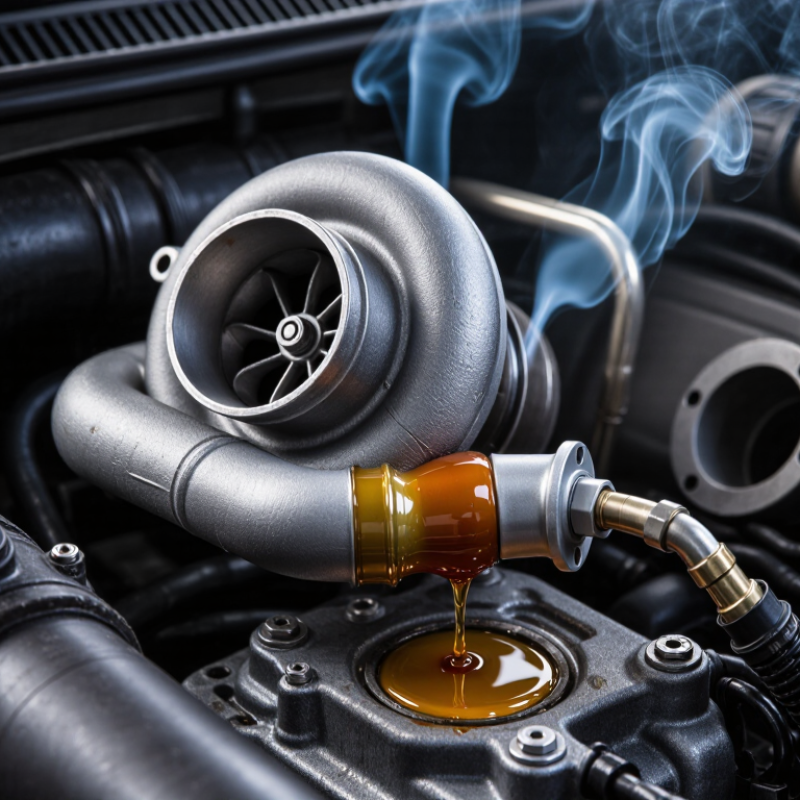
A turbo oil pipe carries pressurized engine oil to the turbocharger’s bearings and returns it to the sump. This oil reduces friction, removes heat, and protects the shaft at extreme speed. SAE International technical literature reports that many turbochargers can exceed 150,000 revolutions per minute. Small oil-flow problems can become serious quickly.
Watch for seven warning signs: fresh oil around the pipe, blue exhaust smoke, falling oil level, a high-pitched whine, slower acceleration, excessive heat smell, and hard carbon deposits near the turbo. A restricted feed pipe may starve the bearings. A blocked return pipe can force oil past the seals. I have seen a thin, wet film dismissed as harmless. That judgment can be wrong. The EPA’s 2023 Automotive Trends Report shows turbocharged engines now power roughly half of new light-duty vehicles in the United States. Their oil systems deserve closer attention.
During inspection, check the pipe’s fittings, bends, protective sleeve, and sealing washers. Look for crushed sections, staining, and oil baked into black residue. Do not rely only on dashboard warnings. Measure oil pressure when appropriate, and compare symptoms with the vehicle’s service data. A brief rattle after startup may indicate delayed oil delivery, but diagnosis is not always perfect. A technician should inspect the turbo, oil filter, ventilation system, and engine oil together. Fresh oil alone may hide the underlying restriction.
A failing turbo oil pipe can develop subtle problems before serious damage appears. Watch for seven warning signs: fresh oil around the pipe fittings, blue smoke from the exhaust, falling engine-oil levels, and a sharp burnt-oil smell. Oil may collect beneath the turbocharger or drip onto hot components. Do not ignore that smell. A blocked feed pipe can starve the turbocharger, while a restricted return pipe can force oil past its seals.
Other signs include louder whining, slower acceleration, uneven boost, and an illuminated oil-pressure warning light. The turbo may sound like a faint whistle at first, then become harsh or metallic. That change matters. Reduced power can also come from unrelated faults, so diagnosis should not rely on sound alone. I have seen drivers replace a turbo when a loose pipe fitting caused the real leak.
Inspect the pipe when the engine is cold. Look for hardened seals, crushed sections, dark varnish, or wet connections. Check the oil level on level ground, using the correct procedure for the vehicle. Never remove a pressurized line. A qualified technician can measure oil pressure, inspect flow, and confirm whether contamination caused the restriction. One overlooked detail is heat damage near the exhaust housing. It can weaken the pipe internally while the outside still looks acceptable. That is easy to miss.
A failing turbo oil pipe can quietly reduce engine performance before major damage appears. The pipe supplies pressurized oil to the turbocharger’s bearings. If it becomes blocked, cracked, or restricted, lubrication drops quickly. The turbo may whistle, respond slowly, or produce less boost. Acceleration then feels flat, especially when climbing or carrying weight.
In workshop inspections, I look for fresh oil around the pipe fittings, dark deposits, and crushed sections near hot components. Smoke from the exhaust can appear when oil reaches the intake or exhaust side. Oil consumption may also increase between services. The engine control system might record a low-boost fault, but electronic readings do not always identify the real cause. A leaking hose, worn bearing, or faulty sensor can create similar symptoms.
Do not guess too quickly. A low oil level can worsen turbo wear, yet it may not be the original problem. I prefer checking oil pressure, pipe flow, and turbo shaft movement after the engine cools. Metal particles in drained oil deserve attention. They can indicate internal wear, though one inspection may not reveal everything. Delayed diagnosis often turns a small pipe repair into turbocharger damage, reduced power, higher exhaust smoke, and costly engine stress.
How turbo oil pipe problems can affect engine performance
Oil supply restrictions, leaks, or blocked return lines can reduce turbocharger lubrication and cooling. Common results include reduced boost, smoke, oil consumption, unusual noises, and potential turbocharger damage. The scores show relative diagnostic priority, not failure probability or laboratory measurements.
A failing turbo oil pipe may leave clues before the turbocharger is damaged. Look for fresh oil around pipe joints, a burnt-oil smell, or blue-gray exhaust smoke. A low oil level is another warning. So is a new whining sound. These signs can have other causes, so they do not confirm pipe failure alone.
Heat cycles can harden seals and loosen connections over time. Road debris, corrosion, or a poorly routed pipe may also cause leaks or restrict oil flow. With the engine switched off and fully cool, inspect the pipe for wet patches, cracked seals, dents, or rubbing marks. Use a light and check beneath the turbo and along the pipe’s route. Do not touch hot parts. A damp area can be difficult to spot, and old residue may mislead you.
Check the oil level and note whether it drops between checks. If safe to do so, compare the pipe’s condition with the vehicle’s service information; avoid loosening fittings just to investigate. A mechanic can pressure-test the system and check for restricted flow or leaks. That extra step matters. Replacing a pipe based on smoke alone may miss a worn turbo seal or another oil leak. If oil is leaking heavily or the engine’s oil-pressure warning appears, stop driving and arrange an inspection.
| Sign or Symptom | Possible Oil-Pipe Issue | Common Causes | Diagnostic Checks | Urgency |
|---|---|---|---|---|
| 1. Visible oil around a pipe or connection | A feed or return line, seal, or fitting may be leaking. | Loose or damaged connections, worn seals, corrosion, cracked pipe, or heat-related deterioration. | With the engine off and cool, clean the area and inspect the pipe and fittings. Recheck for fresh oil after a brief run; do not touch hot components. | High if oil is actively dripping or the level is falling. |
| 2. Burning-oil smell or smoke from the engine bay | Leaking oil may be reaching the hot turbocharger or exhaust parts. | A leaking feed line, return line, seal, or damaged connection; oil residue on hot surfaces can also cause the odor. | Look for fresh wetness or oil residue near the turbo and exhaust while the engine is cool. Check for smoke without placing hands near hot or moving parts. | High; stop driving if smoke is heavy or oil is contacting hot parts. |
| 3. Falling engine-oil level without an obvious external leak | Oil may be escaping at a concealed pipe connection or entering the turbocharger. | A hidden leak, restricted oil drain, or turbocharger seal problem; oil consumption can also have other engine-related causes. | Check the dipstick on level ground using the vehicle’s specified procedure. Inspect pipe connections and intake or exhaust paths; assess other possible sources before blaming the pipe. | High if the level drops quickly; keep oil within the specified range. |
| 4. Blue or blue-gray exhaust smoke | A restricted or leaking oil return pipe can contribute to oil backing up in the turbocharger. | A kinked, blocked, or carboned-up return line; turbocharger wear or engine problems can produce a similar symptom. | Note when the smoke occurs and check oil level, return-line routing, and signs of blockage. A technician may inspect the turbo and crankcase ventilation system. | High; persistent blue smoke needs prompt diagnosis. |
| 5. Reduced boost or slower acceleration | Insufficient oil supply may damage turbo bearings, but a pipe fault is only one possible cause. | A restricted or leaking feed line, low oil pressure, boost leak, or other turbo-control issue. | Scan for diagnostic trouble codes and inspect the feed line for leaks or damage. Verify oil pressure and check intake hoses and boost plumbing. | Medium to high; avoid hard acceleration until checked. |
| 6. New whining, scraping, or siren-like turbo noise | Oil starvation from a restricted feed pipe can contribute to turbo bearing wear. | Blocked or damaged feed line, low oil pressure, bearing wear, or contact within the turbocharger. | Check oil level and inspect for feed-line leaks. Have a technician assess turbo shaft condition and oil supply; sound alone cannot confirm pipe failure. | High if the noise is sudden, loud, or accompanied by smoke or power loss. |
| 7. Oil-pressure warning or repeated low-oil-pressure readings | A severe leak or restricted oil supply may affect lubrication, though the warning can have many causes. | Low oil level, a feed-line restriction or leak, oil-pump trouble, or an inaccurate pressure sensor. | Stop safely and follow the vehicle manual. Check the oil level when appropriate; do not continue running the engine if the warning remains. Confirm pressure with proper test equipment. | Immediate; shut down the engine if the warning indicates low pressure. |
Note: These symptoms can have causes other than a turbo oil pipe. Confirm the fault by inspecting the oil lines and checking oil pressure, turbo condition, and related systems before replacing parts.
A failing turbo oil pipe may leave wet, dark oil around its fittings, a burnt-oil smell, or blue smoke from the exhaust. Low oil pressure, unusual turbo noise, and fresh drips beneath the engine also deserve attention. These clues are not proof by themselves; leaks can come from nearby seals or hoses. Let the engine cool before inspecting, and avoid driving if oil is dropping quickly.
Repair depends on the fault. A cracked, crushed, or badly corroded pipe usually needs replacement, not patching. Check both the oil feed line and the larger return line, since a restricted return can force oil past the turbo seals. Fit the correct seals, route the pipe without bends or contact with hot parts, and tighten connections to the vehicle’s service specifications. If the turbo has shed debris, have the oil supply and filter checked before fitting another unit. Small shortcuts can become expensive.
Tips: Use the specified engine oil and change it on schedule. After turbo work, follow the service procedure for priming and checking oil flow; do not assume the turbo is lubricated. Reinspect fittings after the first heat cycle. I would still verify the leak source before ordering parts—oil travels, and appearances can mislead.
Look for fresh oil near fittings, blue-gray exhaust smoke, falling oil levels, or a burnt-oil smell. A new whining sound may also appear. None proves pipe failure alone.
Yes. Oil may collect below the turbo or drip onto nearby hot parts. Check for dark, wet patches with the engine fully cool. Old residue can mislead you.
A blocked feed pipe can reduce oil reaching the turbo. A restricted return pipe can push oil past its seals. Small restrictions matter.
Switch off the engine and let it cool completely. Use a light to check fittings, seals, dents, and rubbing marks. Never loosen a pressurized line or touch hot parts.
No. Smoke can come from worn turbo seals or another oil leak. A mechanic can check oil pressure, flow, and nearby components before parts are replaced.
Stop if oil is leaking heavily, dropping quickly, or the oil-pressure warning light comes on. Arrange a qualified inspection. Do not gamble with low oil pressure.
A cracked, crushed, or badly corroded pipe usually needs replacement, not patching. The feed and return lines should both be checked. Correct routing and seals matter.
Use the specified engine oil and follow its change schedule. After turbo work, follow the service procedure for priming and checking oil flow. Recheck fittings after the first heat cycle. I might still verify the leak source twice; oil can travel.
A turbo oil pipe carries oil to and from the turbocharger, helping lubricate and cool its moving parts. What are the signs of a failing turbo oil pipe? Common warning signs include visible oil around the pipe or turbo, falling oil levels, blue or gray exhaust smoke, unusual turbo noises, reduced power or boost, rising engine temperatures, and dashboard warnings. These symptoms can affect engine performance and, if ignored, may lead to turbocharger damage.
Failure can result from heat-related wear, cracks, loose connections, blockages, or contaminated oil. A careful inspection for leaks and damage, along with checks of oil flow and pressure, can help identify the cause. Repair may involve tightening connections, clearing a blockage, or replacing a damaged pipe. Regular oil changes, prompt attention to leaks, and routine inspection of the pipe and fittings can help prevent recurring problems and protect the turbocharger.

TerraForge Machinery