China Top 10 High Pressure Flexible Hose Suppliers

Time:2026-10-21 Author:Mason
0%

China’s high-pressure flexible hose industry serves hydraulic, petrochemical, construction, mining, and energy applications worldwide. This guide introduces ten notable Chinese suppliers for buyers comparing performance, production capability, and service reliability. It focuses on manufacturers with practical experience in reinforced rubber, thermoplastic, and metal hose systems.

Can flexible hoses handle high-pressure fluids? Yes, when engineers match the hose structure, pressure rating, temperature range, and fluid compatibility correctly. Steel-wire reinforcement, precise crimping, and tested inner tubes help prevent leakage under demanding conditions. A hose may look robust, yet its fittings, bends, and installation often determine real-world safety. Small details matter.

The selected suppliers should be evaluated through documented evidence, not attractive catalog images alone. Buyers can review ISO certifications, SAE or EN compliance, burst-pressure test reports, traceability systems, and factory inspection records. Product samples and independent testing add confidence. Some suppliers may communicate well but lack consistent export support. Others may offer strong pricing while needing closer quality supervision. That is worth remembering.

This overview considers manufacturing scale, customization ability, quality controls, export experience, and technical responsiveness. It also highlights suitable applications and possible purchasing concerns. Specifications can change, and supplier rankings are never permanent. Request current certificates, drawings, test data, and warranty terms before placing an order. A careful comparison protects equipment, workers, and long-term operating costs.
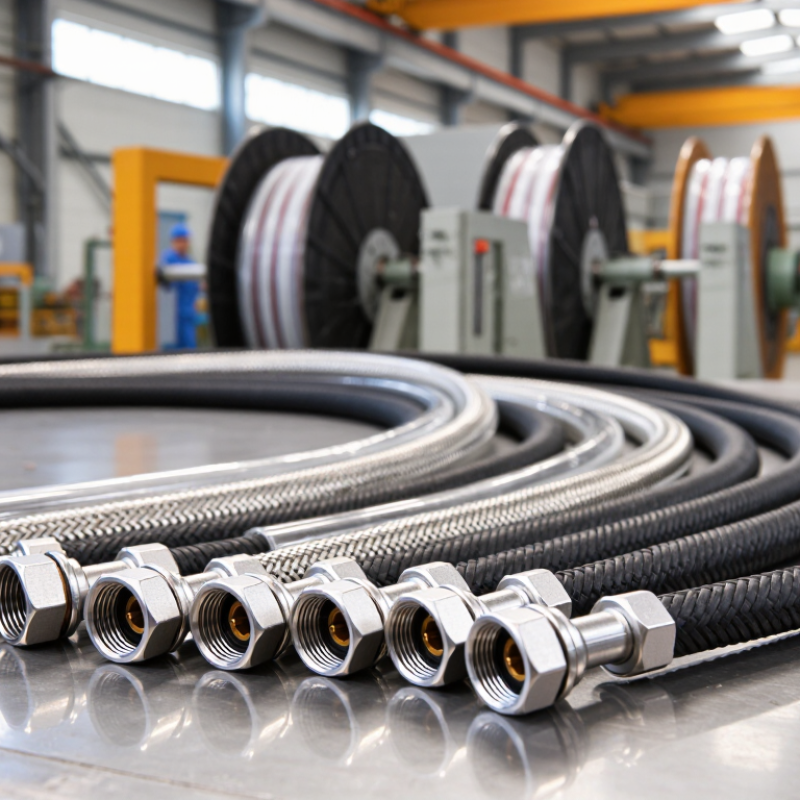
China Top 10 High Pressure Flexible Hose Suppliers

What Are High Pressure Flexible Hoses and Where Are They Used?

High pressure flexible hoses are engineered tubes that transport fluids or gases under demanding pressure conditions. They usually combine an inner tube, reinforcement layers, and an outer protective cover. Reinforcement may use braided wire, spiral wire, textile, or composite materials. The correct structure depends on pressure, temperature, fluid compatibility, and movement.

These hoses are used in hydraulic machinery, construction equipment, mining systems, ship maintenance, and industrial production lines. They connect moving components without creating rigid stress points. In a factory, a hose may carry hydraulic oil through a vibrating press. On a construction site, it may transfer fluid between a pump and an excavator arm. Some systems also use flexible hoses for water, air, steam, or approved chemical fluids. Small details matter. A tight bend can damage reinforcement.

Reliable selection requires more than checking the maximum pressure printed on a product sheet. Engineers should examine working pressure, burst pressure, impulse resistance, bend radius, connector design, and operating temperature. Field experience shows that heat and repeated movement often shorten service life. Inspection should include surface cracks, bulges, leakage, and damaged fittings. The hose may appear sound but still need replacement. This is where supplier testing, material traceability, and clear technical documentation become valuable. I have seen installations fail because the hose matched the pressure but not the fluid. That mistake is easy to overlook.

How to Evaluate High Pressure Flexible Hose Suppliers in China

When evaluating high pressure flexible hose suppliers in China, begin with engineering evidence, not polished catalogs. MarketsandMarkets estimates the global hydraulic hose market will grow from about USD 2.1 billion in 2023 to USD 2.8 billion by 2028. This growth increases supplier choices, but quality can vary sharply. Request pressure ratings, burst-test results, impulse-cycle data, temperature limits, and minimum bend radius. Compare these values with SAE J517, EN 853, or ISO 18752 requirements.

Audit the supplier’s factory when possible. Check wire-braiding equipment, rubber storage conditions, crimping controls, and batch traceability. An ISO 9001 certificate helps, but it does not prove every hose performs reliably. Ask for recent third-party test reports and random samples from finished production. Inspect fittings closely. Threads should be clean, plating should be even, and assemblies should show no exposed reinforcement. Small details matter.

Do not judge only by price. A lower quotation may hide weaker reinforcement, inconsistent tolerances, or limited after-sales support. Require written quality agreements, inspection procedures, packaging standards, and replacement responsibilities. The evaluation process is rarely perfect. Factory visits can show one excellent production line while missing another. Repeated sampling is wiser than one impressive demonstration. A dependable supplier explains failures openly, keeps records, and accepts measurable acceptance criteria. That behavior is often more valuable than a perfect presentation.

China Top 10 High Pressure Flexible Hose Suppliers: How to Evaluate Suppliers in China

The chart compares representative maximum working-pressure ratings for widely used hydraulic hose constructions. Actual ratings depend on nominal bore, temperature, fluid compatibility, and the manufacturer’s certified datasheet.

When evaluating Chinese suppliers, request size-specific datasheets, EN 853, EN 856, or SAE J517 compliance evidence, burst-pressure test reports, impulse-test records, material traceability, and quality-management certificates. The figures shown are representative industry ratings, not company-specific data or a supplier ranking.

China’s Top 10 High Pressure Flexible Hose Suppliers

China’s Top 10 High Pressure Flexible Hose Suppliers operate in a demanding industrial market. Grand View Research reports that the global industrial hose market was valued at approximately USD 13 billion in 2023. Demand continues across construction, mining, energy, chemical processing, and hydraulic equipment. Chinese suppliers benefit from broad manufacturing capacity, export experience, and access to reinforced rubber, thermoplastic, and stainless-steel materials.

A reliable comparison should examine more than factory size. Pressure ratings, impulse testing, bend radius, temperature resistance, and fitting quality deserve careful attention. The ISO 18752 standard provides useful guidance for hydraulic hose performance and classification. Suppliers with documented batch testing can show stronger quality control. Bureau Veritas and other inspection bodies also emphasize traceability in industrial component supply chains. Small details matter. A readable hose marking can prevent a costly installation error.

MarketsandMarkets expects the industrial hose sector to grow steadily through 2028, supported by infrastructure investment and equipment modernization. However, published rankings can be imperfect. Production capacity does not always equal field reliability. I would also question unusually low quotations, especially when test records or material certificates are missing. The strongest candidates among China’s top ten should provide sample reports, pressure-test evidence, export documentation, and responsive engineering support. Buyers should verify performance under actual working conditions, not only rely on catalog figures. Discovery remains necessary.

Key Products, Materials, and Manufacturing Capabilities

China’s top 10 high pressure flexible hose suppliers should be assessed by products, materials, and manufacturing depth, not export volume alone. Grand View Research estimates the global industrial hose market reached about USD 16.6 billion in 2023, with steady growth through 2030. This demand supports hydraulic, chemical, marine, mining, and energy applications. Leading Chinese suppliers commonly produce hydraulic hose assemblies, PTFE hoses, thermoplastic hoses, water-blasting hoses, and metal-reinforced flexible lines. Rubber compounds often include synthetic rubber, while inner tubes may use PTFE, nylon, or polyurethane. Reinforcement typically combines high-tensile steel wire, textile braid, aramid fiber, or stainless-steel braid.

Material selection changes service life. Dramatically.

PTFE handles aggressive chemicals and high temperatures, but it needs careful support against mechanical damage. Steel-wire spiral construction suits severe pressure pulses, while textile reinforcement reduces weight for mobile equipment.

MarketsandMarkets identifies hydraulic hose demand as closely linked to construction, agriculture, and industrial machinery investment. Therefore, manufacturing capability matters as much as product range.

Strong suppliers operate extrusion, braiding, spiral winding, vulcanization, crimping, and assembly lines. They should verify impulse cycles, burst pressure, leakage, dimensional accuracy, and cleanliness. ISO 18752 and related testing practices provide useful benchmarks, but certificates alone do not prove field reliability.

A supplier’s traceability records, batch testing, and response to failure claims deserve equal attention. One practical weakness remains: published data rarely compares all ten suppliers under identical test conditions.

How to Choose the Right Chinese Supplier for Your Application

Choosing a Chinese high-pressure flexible hose supplier requires more than comparing unit prices. MarketsandMarkets’ 2024 Hydraulic Hose Market report estimates the sector at about USD 1.8 billion in 2024, with projected growth toward USD 2.5 billion by 2029. This demand increases supplier competition, but not every factory controls quality equally. Request production records, pressure-test reports, material certificates, and traceability for each batch.

Match the hose to the real application. Check working pressure, burst pressure, temperature, fluid compatibility, bend radius, and impulse cycles. ISO 18752 classifies hydraulic hose performance by pressure and impulse requirements, while SAE J517 defines widely used hose construction and performance criteria. Ask whether the supplier tests complete assemblies, not only rubber tubes. A fitting that looks perfect can still leak under repeated movement.

Visit the factory if possible. Observe crimping, cleanliness, storage, and calibration labels. A small detail matters. Ask for a sample built with your actual fitting and installation length. I once treated a polished test certificate as sufficient; that was too optimistic. Independent testing is worth considering for critical equipment. Also review response time, replacement procedures, export experience, and spare-part availability. The cheapest quotation may become expensive after one failed shutdown. Supplier selection should remain evidence-based, yet field feedback deserves attention too.

FAQS

What products should a capable high-pressure hose supplier offer?

Common products include hydraulic assemblies, PTFE hoses, thermoplastic hoses, and water-blasting lines. A supplier may also produce metal-reinforced flexible hoses.

Which materials are commonly used in high-pressure hoses?

Inner tubes may use synthetic rubber, PTFE, nylon, or polyurethane. Reinforcement can include steel wire, textile braid, aramid fiber, or stainless-steel braid.

How does material selection affect hose performance?

PTFE supports aggressive chemicals and high temperatures. Steel-wire spirals handle severe pressure pulses. Textile reinforcement reduces weight. Trade-offs remain.

What technical information should buyers request?

Request working pressure, burst pressure, temperature range, bend radius, and impulse-cycle results. Also confirm fluid compatibility and dimensional accuracy.

Should suppliers test complete hose assemblies?

Yes. A fitting can look perfect and still leak during repeated movement. Ask for a sample using your actual fittings and installation length.

Which manufacturing processes indicate stronger production capability?

Useful processes include extrusion, braiding, spiral winding, vulcanization, crimping, and final assembly. The factory should maintain calibrated equipment and clear batch records.

Are certificates enough to prove hose reliability?

No. Certificates provide useful evidence, but they cannot prove field performance alone. Review batch testing, traceability, cleanliness, and failure-response records. A polished certificate can mislead.

What should buyers inspect during a factory visit?

Observe crimping quality, storage conditions, cleanliness, and calibration labels. Check whether materials are protected from damage and clearly identified.

How can buyers compare suppliers fairly?

Compare suppliers using identical pressure, temperature, movement, and leakage requirements. Independent testing may help for critical equipment. Published comparisons are often incomplete.

Is the cheapest quotation usually the best choice?

Not always. A low price may become expensive after leakage, replacement delays, or equipment shutdowns. Review response time, spare-part availability, replacement procedures, and field feedback. I would not rely on price alone.

Conclusion

High-pressure flexible hoses are engineered fluid-transfer components designed to convey liquids or gases safely where movement, vibration, thermal expansion, or limited installation space makes rigid piping impractical. Can flexible hoses handle high-pressure fluids? Yes, when they are correctly designed, reinforced, tested, and matched to the working pressure, temperature, chemical compatibility, and bending requirements of the application. They are commonly used in hydraulic systems, industrial processing, energy equipment, construction machinery, and other demanding environments.

This guide introduces ten leading categories of high-pressure flexible hose suppliers in China and explains how to evaluate them without relying solely on price. Important factors include manufacturing experience, quality-control procedures, certification, traceability, customization capability, delivery reliability, and technical support. It also reviews common hose materials, reinforcement structures, connection types, and production capabilities. To select the right supplier, buyers should clearly define operating conditions, request technical documentation and samples, verify testing standards, compare service terms, and confirm that the proposed hose assembly is suitable for the complete application.

Mason

Mason

Mason is a seasoned marketing professional with a deep expertise in the company's offerings and a passion for driving brand awareness. With a strong background in digital marketing strategies, he has an innate ability to connect with diverse audiences and effectively communicate product benefits.......