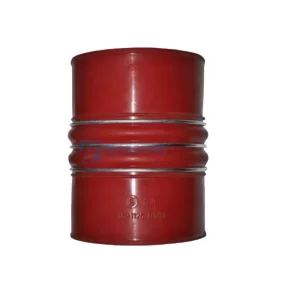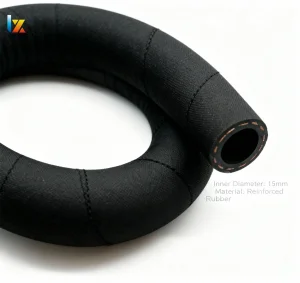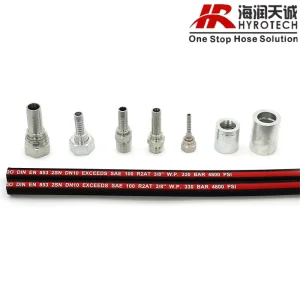
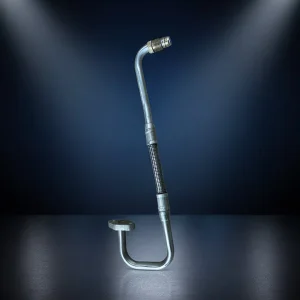
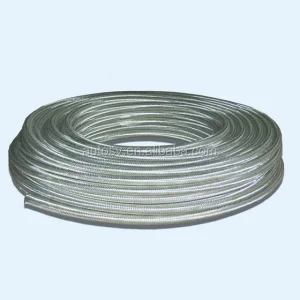
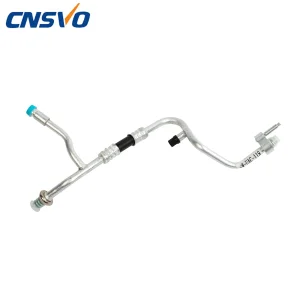
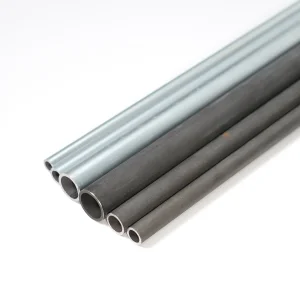
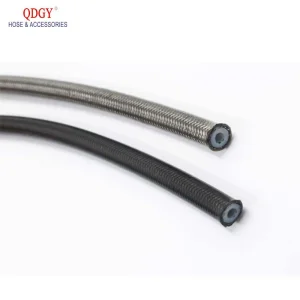
As international emissions frameworks like Euro VI, EPA 10, Tier 4 Final, and China VI place stringent limits on Nitrogen Oxide (NOx) output, Selective Catalytic Reduction (SCR) has become the definitive path for diesel engine architecture. The SCR system depends completely on the precise delivery of Diesel Exhaust Fluid (DEF) / AdBlue—a highly corrosive, crystallization-prone urea solution. The Urea Injection Hose acts as the system's lifeline, bridging the storage tank, dosing unit, and exhaust injector under extreme vibration and temperature variances.
Failure within this transport system compromises emissions status, leads to engine derating, and damages expensive catalytic matrices. Recognizing this industrial pain point, leading global manufacturers like Qingdao TerraForge Machinery Co., Ltd. have engineered specialized fluid handling lines built to prevent structural breakdown, crystallization blockages, and ozone-induced degradation.

Operating a diesel fluid dosing system requires specialized mechanical considerations. DEF consists of 32.5% high-purity urea and 67.5% deionized water. At temperatures below -11°C (12°F), the fluid solidifies and expands. Conversely, high engine temperatures trigger premature decomposition of the water content, causing crystallization. Hoses must balance structural resilience with precise thermal management.
Inner lining layers are extruded with chemically inert materials like Polyamide 12 or peroxide-cured EPDM. This prevents polymer leaching, ensuring the AdBlue maintains strict ISO 22241 purity standards to protect catalytic systems from heavy metal contamination.
To counteract freezing, advanced SCR lines feature co-wound resistance heating wires. Controlled by the vehicle's ECU, these elements rapidly thaw frozen DEF, ensuring emission compliance within minutes of engine ignition.
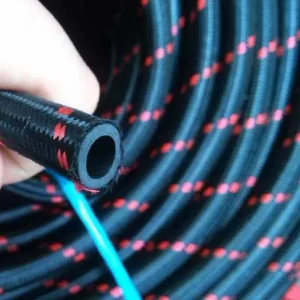
Hoses utilize high-tenacity polyester or aramid yarn braids. This reinforcement sustains system working pressures of 8 to 15 bar, while comfortably absorbing spikes during dosing cycles or thermal expansion from freeze states.
SCR heating technology must maintain a narrow temperature band. Under-heating results in blockages, whereas over-heating accelerates urea decomposition, generating biuret molecules that clog dosing injectors. Leading exporters integrate customized carbon-fiber or copper-alloy heating loops, insulation layers (such as PA corrugated tubes or expanded EPDM sleeves), and SAE J2044 quick connectors with built-in heating continuity pin-outs.
Qingdao TerraForge Machinery Co., Ltd. specializes in advanced fluid lines engineered to meet these demands. They use premium raw materials and advanced reinforcement technologies, yielding hoses with exceptional temperature tolerance, chemical compatibility, and durability under mechanical vibration.
Urea is a highly effective solvent. Typical industrial elastomers, like standard nitrile rubber (NBR), degrade and leach plasticizers when exposed to DEF. These impurities degrade the platinum/vanadium coatings in catalytic converters, leading to exhaust system failure. Specialized SCR hoses utilize high-density polymer matrices that ensure zero chemical migration and keep emissions systems compliant over long operational lifespans.
For procurement officers and automotive engineers, cross-checking dimensional and operational parameters is essential for system integration. The table below lists standard parameters for commercial vehicle and off-highway heavy-duty SCR urea injection assemblies:
| Hose Nominal Size (DN) | Inner Diameter (ID - mm) | Outer Diameter (OD - mm) | Standard Operating Temp Range | Min. Bend Radius (mm) | Burst Pressure Rating (Bar) |
|---|---|---|---|---|---|
| DN 4 | 4.0 ± 0.15 | 8.0 ± 0.25 | -40°C to +125°C | 35 mm | > 45 Bar |
| DN 6 | 6.0 ± 0.20 | 11.0 ± 0.30 | -40°C to +135°C | 45 mm | > 40 Bar |
| DN 8 | 8.0 ± 0.20 | 13.5 ± 0.35 | -40°C to +140°C | 55 mm | > 35 Bar |
| DN 12 | 12.0 ± 0.25 | 19.0 ± 0.40 | -40°C to +125°C | 85 mm | > 30 Bar |
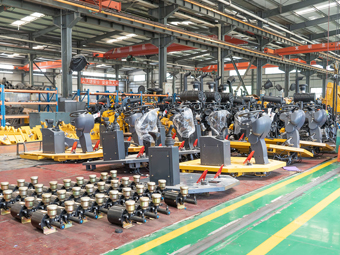
Quality control at modern urea injection hose factories requires specialized testing. Because SCR lines operate under high pressures and in close proximity to exhaust systems, they must pass rigorous validation testing. Industry leaders implement the following test protocols:
Sourcing urea injection components involves managing logistical, environmental, and technical variables. Heavy-duty vehicle builders face unique challenges in different markets:
Requires compliance with strict EPA regulations and high performance across diverse climates, from sub-zero conditions in Canada to intense desert heat in the southern US.
Focuses on lightweighting, integration of small-diameter heated lines (DN3 to DN4), and quick connectors like SAE J2044 to speed up vehicle assembly lines.
Heavy production volumes in China and India drive the demand for cost-effective, high-durability SCR systems that handle varying diesel quality and demanding operating cycles.
Headquartered in the industrial hub of Qingdao, China, Qingdao TerraForge Machinery Co., Ltd. is a leading manufacturer and supplier of durable, high-performance automotive fluid hoses and fluid line systems. Specializing in advanced coolant hoses, gearbox oil pipes, steering fluid lines, and windshield washer hoses, TerraForge is committed to delivering reliable solutions engineered to meet the rigorous demands of modern vehicle systems. Automotive fluid hoses play a critical role in transporting essential media such as coolant, lubricants, hydraulic steering fluids, and washer liquids throughout a vehicle's operation, ensuring efficient thermal management, smooth transmission performance, responsive steering, and optimal visibility.
Precision manufacturing and strict quality controls are central to every production stage at TerraForge. The company uses premium materials and reinforcement technologies to produce hoses designed for exceptional temperature resistance, chemical compatibility, pressure tolerance, and vibration durability—ensuring long service life and dependable performance under extreme operating conditions. Whether serving passenger cars, commercial vehicles, or aftermarket repair markets, TerraForge's products are engineered to meet international standards and client specifications.
Dedicated to customer satisfaction, Qingdao TerraForge Machinery supports OEM and customized fluid hose solutions, offering expert technical support and flexible production capacity. With an expanding global footprint and a commitment to innovation, TerraForge continues to grow as a trusted partner for automotive manufacturers, repair facilities, and distributors, driving forward automotive fluid handling technology with dependable performance and quality at every turn.
Why is material purity critical in Urea Injection Hose construction?
DEF is highly sensitive to trace metal ions (such as copper, zinc, iron, and sodium). Sourcing hoses that are not certified to ISO 22241 can result in material extraction, causing chemical impurities to contaminate the SCR catalyst, which leads to irreparable damage and increased exhaust emissions.
How do heated urea lines prevent blockages when the engine is turned off?
Upon turning off the ignition, most modern diesel vehicles trigger a purge cycle, drawing back remaining DEF from the lines to prevent freezing inside the hose. The electric heating wires inside the hose assembly then thaw any residual frozen fluid at startup, preventing blockages.
What is the standard lifetime expectancy of an OEM-grade SCR line?
OEM-grade hoses are designed to last the life of the vehicle, typically exceeding 10 years or 1,000,000 kilometers in commercial vehicle applications, provided they are shielded from mechanical impact and high-temperature points like the DPF housing.
How do TerraForge hoses perform under vibration and pressure spikes?
By incorporating high-density synthetic braids and flexible corrugated polyamide protective layers, our hoses absorb chassis vibrations and handle pressure spikes from the dosing unit without showing signs of fatigue or mechanical failure.
 TerraForge Machinery