Engineered to deliver peak reliability under Dubai's high ambient heat, severe coastal salinity, and intensive duty cycles.
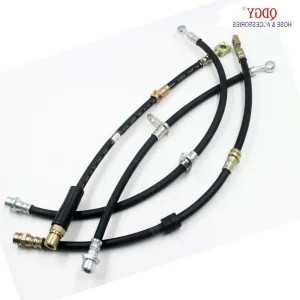
The Middle East, specifically the GCC region with Dubai as its logistical and commercial epicenter, presents one of the most challenging operating environments in the world for automotive components. Ambient temperatures routinely exceed 50°C during summer, leading to under-hood temperatures climbing past 120°C. For hydraulic brake systems, this heat presents a direct risk of vapor lock, fluid degradation, and pressure line expansion. Under-engineered rubber brake hoses expand under these conditions, causing a soft brake pedal and compromised stopping distances.
For import distributors, maintenance workshops, and municipal fleet managers operating across the UAE, sourcing brake fluid lines that strictly comply with international standards such as SAE J1401 and DOT FMVSS 106 is not merely a matter of vehicle performance; it is a critical safety imperative. Additionally, the aggressive humidity and atmospheric salinity of Dubai’s coastal areas demand robust rust resistance for metal connectors and braided sleeves. Standard steel fittings degrade rapidly in these conditions, necessitating the deployment of premium-grade 304/316 stainless steel and specialized anti-corrosion platings.
Qingdao TerraForge Machinery Co., Ltd. is a leading manufacturer and supplier of durable, high‑performance automotive fluid hoses and fluid line systems, headquartered in Qingdao, China. Specializing in advanced coolant hoses, gearbox oil pipes, steering fluid lines, and windshield washer hoses, TerraForge is committed to delivering reliable solutions engineered to meet the rigorous demands of modern vehicle systems.
Automotive fluid hoses play a critical role in transporting essential media such as coolant, lubricants, hydraulic steering fluids, and washer liquids throughout a vehicle’s operation, ensuring efficient thermal management, smooth transmission performance, responsive steering, and optimal visibility.
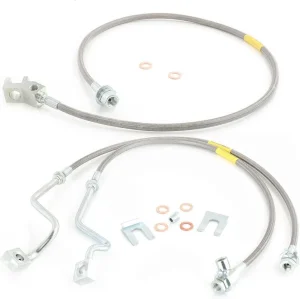
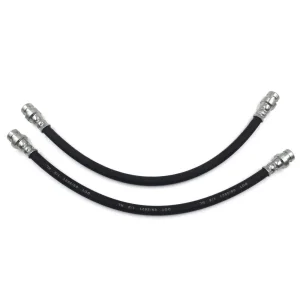
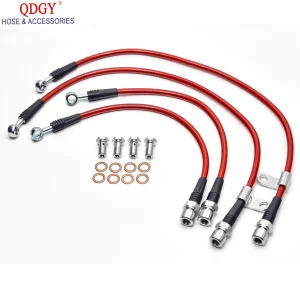
To overcome the physical limits of traditional rubber (EPDM) lines under high-temperature cycles, TerraForge utilizes advanced PTFE (Teflon) inner cores reinforced with double-layered stainless steel wire braiding. Unlike rubber, PTFE does not expand under pressure or degrade when exposed to synthetic glycol-ether and silicone-based brake fluids (DOT 3, DOT 4, DOT 5.1). This technology guarantees:
Why Tier-1 distributors and automotive exporters in the Middle East choose China's advanced manufacturing capabilities.
Enabling regional bottling operations and direct OEM vehicle replacements with precise Chinese engineering.
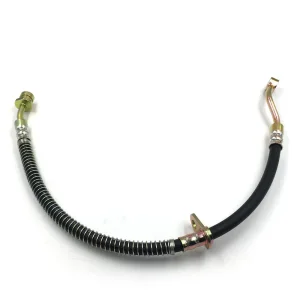
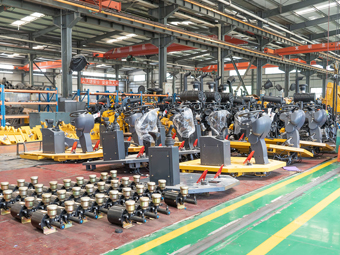
At TerraForge, precision manufacturing and strict quality controls are central to every production stage. The company uses premium materials and reinforcement technologies to produce hoses designed for exceptional temperature resistance, chemical compatibility, pressure tolerance, and vibration durability—ensuring long service life and dependable performance under extreme operating conditions.
Whether serving passenger cars, commercial vehicles, or aftermarket repair markets, TerraForge’s products are engineered to meet international standards and client specifications. Through automated testing rigs, we simulate heavy-braking operations under simulated heat environments to ensure our lines hold their shape and seal without leaking.
Exporters supplying the Middle East must strictly navigate regulatory frameworks. In the United Arab Emirates, the Emirates Authority for Standardization and Metrology (ESMA) monitors all automotive spare parts imported into the local market. Brake lines are categorized as high-risk components and must align with the Gulf Standardization Organization (GSO) technical regulations.
When custom-manufacturing brake lines for Dubai distributors, TerraForge ensures complete alignment with these systems. Our production lines feature engraved traceability codes containing the production date, SAE specification, and batch number. This is critical for clear passing at Jebel Ali Port customs and for workshops executing vehicle inspection checks in the RTA (Roads and Transport Authority) testing centers in Dubai.
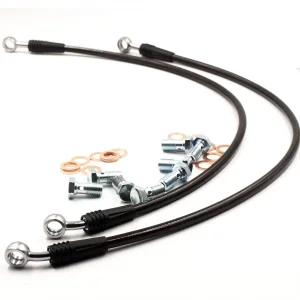
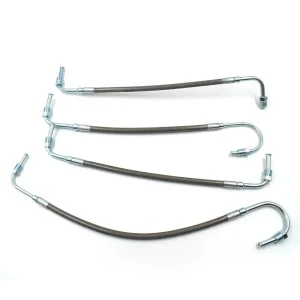
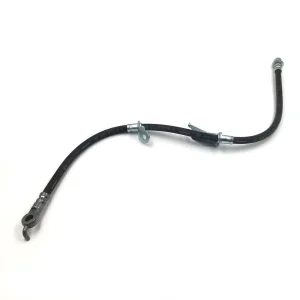
The Dubai car parc is dominated by heavy-duty 4x4s, pickup trucks, and luxury sedans. Japanese platforms like Toyota (Land Cruiser, Patrol) and Nissan are widely utilized in urban and desert terrains. These vehicle applications rely on high-durability banjo configurations. Our machining division utilizes computerized CNC milling to turn solid bar-stock stainless steel and carbon steel into premium end fittings. This ensures that the threads are clean and have zero tolerances, eliminating brake fluid weeping or micro-leakages under heavy pressure spikes.
Get a comprehensive quotation or request personalized CAD designs for specialized GCC-specification fluid hose assemblies.
Send Inquiry NowComplete product range for automotive assemblies, racing environments, and motorcycle configurations.
The automotive industry is undergoing a significant transformation, driven by electrification and advanced autonomous systems. This impacts the design of hydraulic brakes. In hybrid and pure electric vehicles (EVs) which are expanding rapidly in Dubai under the green mobility directives, regenerative braking is standard. Hydraulic braking systems are called upon less frequently but must respond with absolute precision and instantaneous power when activated.
This dynamic creates new challenges for brake hose lines. In conventional systems, regular fluid flow keeps system temperatures relatively distributed. In EVs, the hydraulic fluid sits stagnant for longer periods inside the lines under extreme ambient temperatures, which can accelerate chemical degradation of low-grade inner liners. As a result, the market demand has shifted from standard rubber lines toward premium PTFE braided systems with enhanced vapor-transmission properties. The chemical stability of PTFE ensures that the brake fluid is isolated from moisture absorption, which keeps the boiling point of the hydraulic oil above critical thresholds.
As a global export partner, Qingdao TerraForge Machinery supports client demands through comprehensive end-to-end shipping solutions. We have optimized workflows with international freight forwarders to provide both LCL (Less than Container Load) and FCL (Full Container Load) shipping options directly out of Qingdao Port. For rush-order OEM components, we utilize air transport directly to Dubai International Airport (DXB) or Al Maktoum International Airport (DWC), reducing transit delays to less than 72 hours from factory door to UAE warehouse.
Professional answers to common queries regarding compliance, materials, and importing brake system components to Dubai.
Yes. All of our automotive fluid lines are designed, manufactured, and tested to meet or exceed SAE J1401 and DOT FMVSS 106 specifications. This alignment ensures compliance with local ESMA standards and RTA vehicle safety requirements within the UAE.
PTFE offers zero volumetric expansion under high pressure and temperature cycles. Standard rubber hoses swell slightly when the vehicle is driven in temperatures exceeding 45°C, resulting in a soft pedal. PTFE reinforced with stainless steel braiding guarantees solid brake pressure and prevents moisture contamination.
Ocean transit from Qingdao Port to Jebel Ali typically ranges from 18 to 22 days. Customs clearance and local transport within the UAE (to Dubai Industrial City, Sharjah, or Abu Dhabi) takes an additional 3-5 working days depending on customs queues.
Absolutely. Qingdao TerraForge provides full OEM custom services. We can manufacture brake fluid lines based on CAD drawings, specific OEM parts numbers, or physical samples, including unique angles for banjo fittings or specific thread dimensions (M10, AN3, JIC).
Fine sand particles can act as an abrasive on unprotected rubber hoses. To combat this, our stainless steel braided lines are offered with outer PVC or PU sleeves. This coating prevents sand ingress between the stainless steel braid and the inner tube, maintaining flexibility and preventing premature failure.
 TerraForge Machinery